Alpine Thermal
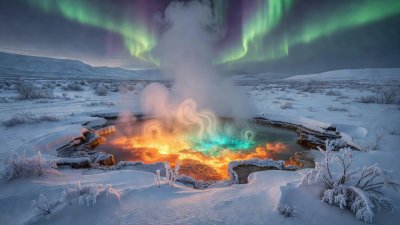
Submerging into 40°C sulfurous and silica-rich spring water while sub-zero mountain winds gust overhead is among humanity’s most ancient physical therapies.
The Geology of Winter Hydrotherapy
Thermal waters in active geological regions are propelled from thousands of meters beneath the continental crust, carrying suspended minerals including magnesium, lithium, bicarbonate, and colloidal silica. In extreme northern winters, the thermal contrast stimulates peripheral circulation, lowers systemic cortisol levels, and induces deep parasympathetic recovery.
Modern architectural masters have transformed these natural springs into spaces of secular reverence. Rather than synthetic tile complexes, our favored retreats incorporate raw granite monoliths, darkened cedar decking, and zero-depth pool edges that visually merge with surrounding snowfields.
"Thermal steam rising into polar twilight creates an otherworldly threshold where bodily tension dissolves into the atmosphere." Elena Rostova, Winter Balneology Institute
Sanctuary Amenity Comparison Matrix
Review the mineral makeup, altitude, and quiet-hour protocols of leading northern thermal destinations.
| Sanctuary Name | Geographic Region | Mineral Profile | Pool Water Temperature | Silence Mandate |
|---|---|---|---|---|
| 7132 Therme Vals | Vals, Switzerland | Sulfate, hydrogen carbonate, calcium | 32°C – 42°C (Various chambers) | Enforced strictly in bath halls |
| Laugarvatn Fontana | Golden Circle, Iceland | Silica, sulfur, alkaline minerals | 34°C – 40°C (Steam chambers) | Quiet evening sessions |
| Takagamine Onsen | Kyoto Prefecture, Japan | Simple alkaline mineral water | 41°C natural outflow | Continuous contemplative silence |
| Scandinave Spa Blue Mountain | Ontario, Canada | Eucalyptus hydrotherapy circulation | 38°C – 40°C thermal plunges | Total digital & spoken silence |
The Balneotherapy Sequence
To maximize the physiological benefit of subarctic bathing, we advise following the historic tripartite cycle practiced across Nordic and Alpine bathhouses:
Phase 1: Hyperthermic Exposure (15–20 min)
Submersion in natural thermal pools between 39°C and 41°C to dilate blood vessels, increase core temperature, and flush metabolic byproducts.
Phase 2: Cold Shock Inversion (30–60 sec)
Immersion into a natural mountain snowbank or 4°C freshwater plunge pool, triggering intense vasoconstriction and endorphin release.
Phase 3: Deep Resting Equilibrium (20 min)
Reclining in a wool-draped lounge beside an open fireplace, sipping herbal tisanes to normalize cardiac rhythm before cycling again.