Night Skies
In an era of relentless artificial illumination, the night sky is humanity’s most endangered wilderness. Northern winter offers long polar nights and crystalline freezing air free of water-vapor haze.
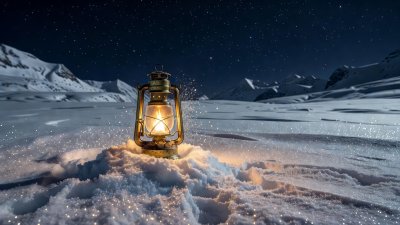
The Atmospheric Physics of Polar Observation
The clarity of winter stargazing is governed by thermodynamics. Sub-zero temperatures dramatically reduce atmospheric humidity. When water vapor drops out of the atmosphere, optical scattering is reduced, allowing stars to appear with needle-sharp intensity.
Within the auroral oval—between roughly 65° and 72° north magnetic latitude—solar wind electrons collide with atomic oxygen and molecular nitrogen in the upper ionosphere. The resulting emissions produce green (557.7 nm) and crimson (630.0 nm) auroral ribbons that dance across frozen mountain skylines.
"To look up into a Bortle 1 winter sky is to step outside time itself. It is the ultimate perspective antidote to modern urgency." Dr. Clara Lindholm, Nordic Observational Astronomy
Designated International Dark Sky Outposts
These four remote observatories combine low skyglow with accessible hospitality.
| Observing Station | Coordinates | Bortle Scale Class | Annual Clear Night Avg. | Key Astral Phenomenon |
|---|---|---|---|---|
| Abisko Aurora Sky Station | 68.35° N, 18.78° E (Sweden) | Class 1 (Exceptional Dark) | 198 Clear Nights | Microclimatic "Blue Hole" Aurora |
| Thingvellir Dark Reserve | 64.25° N, 21.12° W (Iceland) | Class 2 (Typical Truly Dark) | 142 Clear Nights | Fissure-Framed Astral Vistas |
| Keweenaw Dark Sky Park | 47.45° N, 88.05° W (USA) | Class 2 (Dark Sky) | 130 Clear Nights | Lake Superior Aurora Reflection |
| Galloway Forest Reserve | 55.08° N, 4.41° W (Scotland) | Class 2 (Dark Sky) | 120 Clear Nights | Deep Sky Milky Way Core Contrast |
Night Sky Etiquette & Gear Guidelines
True dark sky sanctuaries enforce strict illumination protocols to protect scotopic (night-adapted) vision:
- Red Spectral Lighting Only: Monochromatic red light past 620 nm does not degrade the human eye's rhodopsin reserves. White flashlights, phone screens, and camera flashes are prohibited on observation decks.
- Tripod & Ball-Head Warmers: Metal tripods become brittle and lock up below -20°C. Neoprene leg wraps and lens heating bands prevent condensation and frost formation.
- Viewing Rhythm: Allow 25 uninterrupted minutes in absolute darkness for human rod cells to achieve maximum dark adaptation before critical observation.
Seek the Dark Sky Frontier
Join our monthly astral forecast dispatch for solar flux projections, auroral tracking alerts, and private sanctuary reservations.
Join Astral Roster